
Payroll is one of the most important functions in your business. Every pay run affects employee trust, compliance obligations, financial reporting, and day-to-day operations. When payroll runs smoothly, it often goes unnoticed. When it goes wrong, the consequences can be immediate and costly.
Many providers promote payroll outsourcing as a way to reduce costs and improve efficiency. While those benefits can be significant, choosing the right partner requires careful evaluation. Understanding how to outsource payroll starts with asking the right questions before signing any agreement.
This checklist will help you assess potential providers and identify a payroll outsourcing partner that can support your business today and as it grows.
1. What Payroll Services Are Included?
Not all payroll outsourcing services offer the same level of support. One provider may handle payroll processing only, while another may deliver a broader solution that includes administration, reporting, compliance support, and employee record management.
Before making a decision, ask for a detailed breakdown of what is included. Common services may cover:
- Payroll processing
- Timesheet and attendance management
- Employee records administration
- Payroll reporting
- Leave tracking
- Payroll-related employee support
A clear understanding of service scope helps you avoid unexpected costs and ensures the provider can meet your operational requirements.
2. How Do You Protect Sensitive Payroll Data?
Payroll contains some of the most confidential information within your organisation. Employee salaries, bank account details, tax information, and personal records all require strong protection.
Ask providers about the measures they use to safeguard data. This may include restricted user access, secure systems, documented data protection policies, regular security reviews, and controlled workflows for handling sensitive information. Data security should never be treated as an optional feature. It should be a fundamental part of any payroll outsourcing arrangement.
3. Do You Have Experience Supporting Businesses Like Ours?
Industry knowledge can make a significant difference to service quality. A provider that understands your business environment will often identify challenges faster and adapt more effectively to your requirements.
Consider whether the provider has experience supporting organisations with similar structures, workforce sizes, or operational models. Questions worth asking include:
- Have you worked with businesses in our industry?
- What size organisations do you typically support?
- How do you manage payroll for businesses with multiple departments or locations?
- Can you provide examples of similar clients?
The more relevant their experience, the smoother the transition is likely to be.
4. What Payroll Software and Systems Do You Use?
Technology plays a major role in payroll efficiency and accuracy. The right software can improve reporting, streamline approvals, and reduce administrative workloads.
Ask providers which systems they use and whether those systems can integrate with your existing processes. Compatibility with accounting software, time-tracking platforms, and HR systems can eliminate duplicate work and improve data consistency.
If you are exploring how does outsourcing payroll work, technology is often a key part of the answer. Effective providers combine experienced payroll professionals with reliable systems that support accuracy and visibility.
5. How Do You Ensure Payroll Accuracy?
Payroll errors can damage employee confidence and create unnecessary administrative work. Even small mistakes can lead to compliance concerns, payment delays, or reporting issues.
Reliable providers use structured quality control procedures to minimise risk. These may include multiple review stages, approval workflows, automated validation checks, and regular audits.
Ask potential providers how payroll is reviewed before processing and what controls they have in place to identify discrepancies. Strong processes often distinguish exceptional providers from average ones.
6. What Happens If a Payroll Mistake Occurs?
No provider can realistically promise that errors will never happen. What matters is how they respond when issues arise.
Ask about their procedures for identifying, investigating, and correcting payroll mistakes. Understand who is responsible for managing the issue and how quickly corrective action is taken.
Key questions include:
- How are payroll errors reported?
- What is your average response time?
- Who manages issue resolution?
- How are employees affected by the error supported?
A provider with a clear and proactive approach to problem-solving is often better equipped to maintain service quality over the long term.
7. Can Your Services Scale as Our Business Grows?
Your payroll requirements today may look very different in two or three years’ time.
Growth often brings new challenges. You may hire more employees, expand into new locations, introduce additional benefits, or require more complex reporting.
When evaluating providers, consider whether their services can scale alongside your business. Ask how they support growing organisations and whether they can accommodate changing workforce structures without disrupting payroll operations.
Businesses that understand why to outsource payroll often cite scalability as one of the key advantages. A capable provider should be able to support both your current requirements and your future plans.
8. Who Will Be Our Main Point of Contact?
Payroll issues often require quick answers. When questions arise, you need to know who to contact and how quickly you can expect a response.
Some providers offer dedicated account managers, while others use shared support teams. Neither model is automatically better, but clarity is important from the beginning.
Ask who will manage your account, how communication will be handled, and what support channels are available. Strong communication creates confidence and helps prevent small issues from becoming larger problems.
9. What Are Your Service Levels and Turnaround Times?
Payroll runs on strict deadlines. Missing a reporting deadline or delaying employee payments can create unnecessary complications for your business.
Before engaging a provider, understand their service commitments. Ask about payroll schedules, reporting timelines, processing deadlines, and expected response times for support requests.
Documenting these expectations early helps create accountability and reduces the risk of misunderstandings later. Clear service levels provide a stronger foundation for a successful long-term partnership.
10. Can You Provide References or Client Success Stories?
Any provider can make claims about service quality. Client feedback provides a more reliable way to evaluate performance.
Ask for testimonials, references, case studies, or examples of successful client relationships. Focus on feedback that demonstrates consistency, responsiveness, accuracy, and long-term value.
When reviewing references, look beyond general praise. Consider whether clients describe measurable improvements, successful transitions, or positive experiences with ongoing support. Real-world results often reveal far more than a sales presentation ever can.
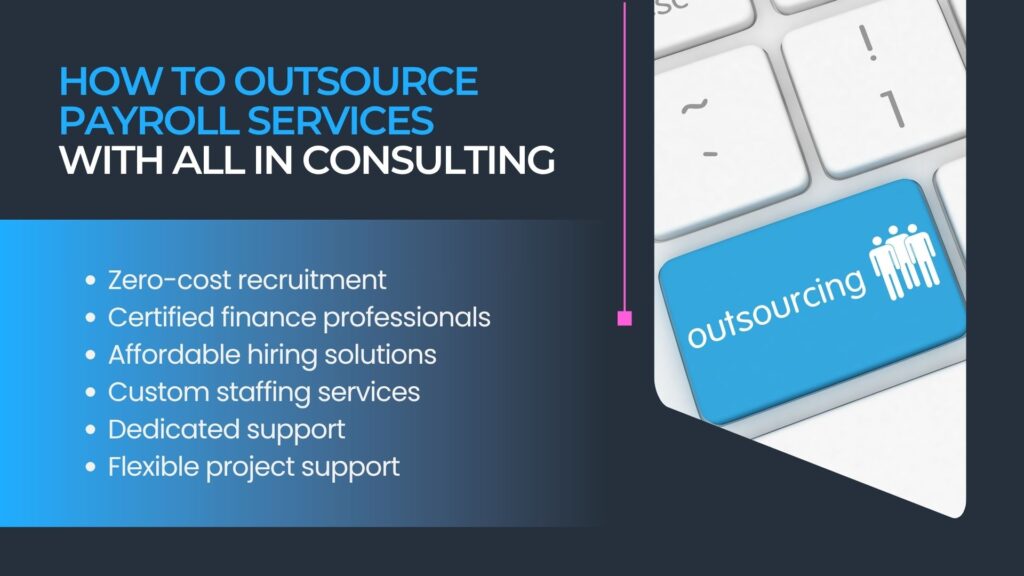
How to Outsource Payroll Services with All In Consulting
Choosing a payroll outsourcing partner requires confidence in their people, processes, and ability to support your business objectives.
At All In Outsourcing, we help UK and US businesses streamline payroll, finance, and accounting functions through flexible outsourcing solutions delivered from the Philippines. Our goal is simple: provide the expertise and support you need to improve efficiency, maintain accuracy, and scale with confidence.
What sets us apart:
- Zero-cost recruitment – You only pay for our services once you are satisfied with the professionals we recruit for your business.
- Certified finance professionals – We recruit experienced and highly trained payroll, accounting, and finance specialists with expertise in leading platforms such as Xero, MYOB, and QuickBooks.
- Affordable hiring solutions – Reduce staffing costs by up to 80% while maintaining access to skilled financial talent.
- Custom staffing services – Whether you need payroll administration support, bookkeeping assistance, or a complete outsourced finance function, we tailor our solutions to your requirements.
- Dedicated support – We work as an extension of your team, providing responsive assistance and ongoing support when you need it.
- Flexible project support – If you have a specific project in mind, our in-house accounting team can deliver cost-effective, high-quality accounting administration services.
Conclusion
If you are researching how to outsource payroll, these ten questions provide a practical framework for evaluating potential providers. They help you assess service quality, security standards, scalability, technology, and support before making a commitment.
If you are looking for a payroll outsourcing solution that aligns with your business goals, book a free consultation with All In Outsourcing today. We will discuss your payroll requirements, answer your questions, and help you explore outsourcing options that support your business now and in the future.
Get in touch with our team and discover how the right payroll partner can help simplify your operations and support sustainable growth.